Internet Companies Will Design AI Agents the Way They Designed Feeds: Path Dependence in Agent Product Design
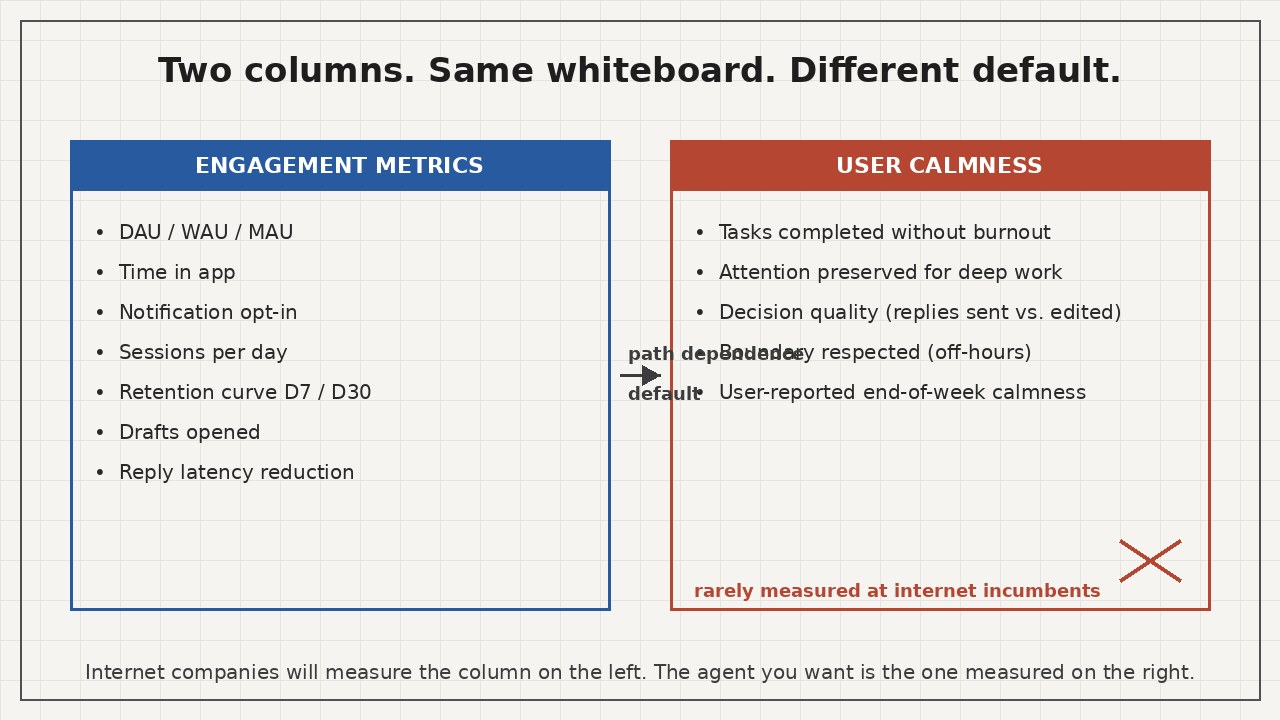
TL;DR A few weeks ago I wrote about the structural shape of inbox-native agents vs. Chrome extensions. That post asked what shapes of agent exist and which one fits which workload. This post asks a different question: who is building these agents, and what organizational baggage will they ship by default? My answer, after a half-year running two agent products in production next to incumbents in the same space, is uncomfortable: internet companies will design AI agents the way they designed feeds — open loops, growth metrics, attention capture — because the org, the dashboards, and the muscle memory are the same. The agent you want (calm, draft-only, guardrail-first) is the one built by a team that was never paid to capture your attention. The agent you will be offered is the one built by a team that always was. The difference is not the technology. The difference is the org chart. ...